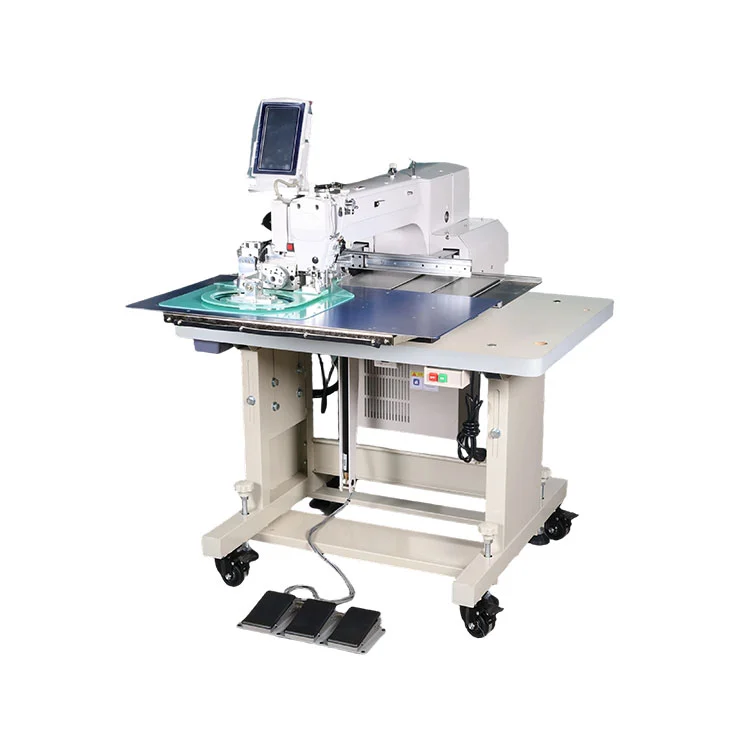
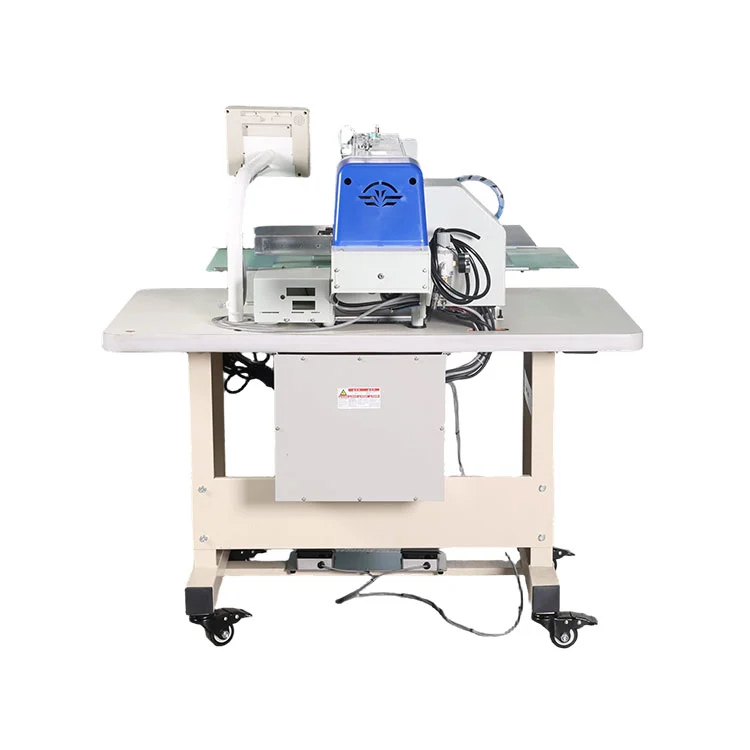
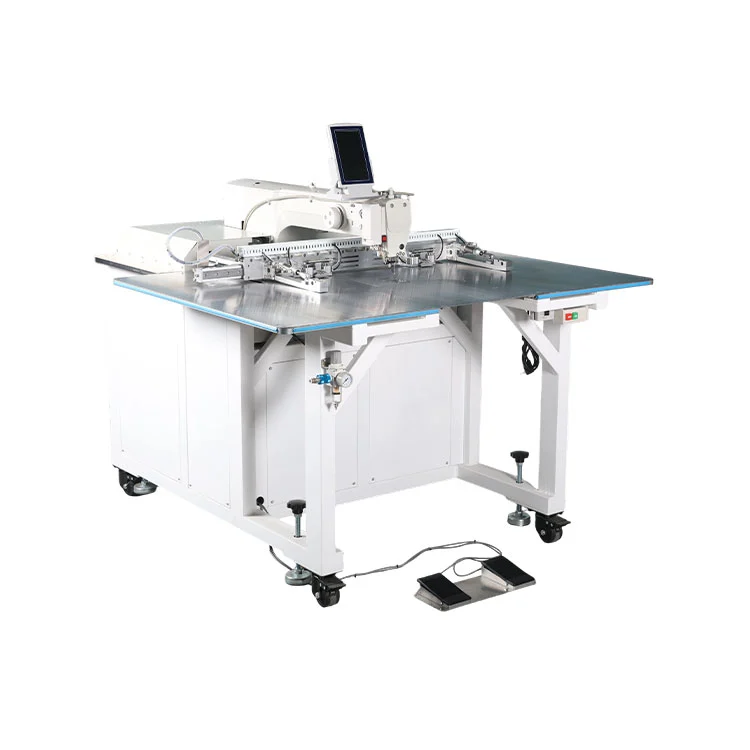
In modern sewing production environments, computerized sewing machines (also known as computerized pattern sewing machines or CNC pattern sewing machines) have become essential equipment for manufacturers of footwear, luggage, and leather goods. However, enterprises relying on imported equipment often face challenges such as lengthy repair times, exorbitant spare parts costs, and slow technical support responses. When production lines grind to a halt due to equipment failure, companies incur not only repair costs but also the consequences of delayed orders and potential loss of customers. How can these risks be mitigated right from the equipment selection stage? Opting for domestic brands that offer independent, controllable technology and comprehensive service networks is increasingly becoming the smart choice for manufacturers.
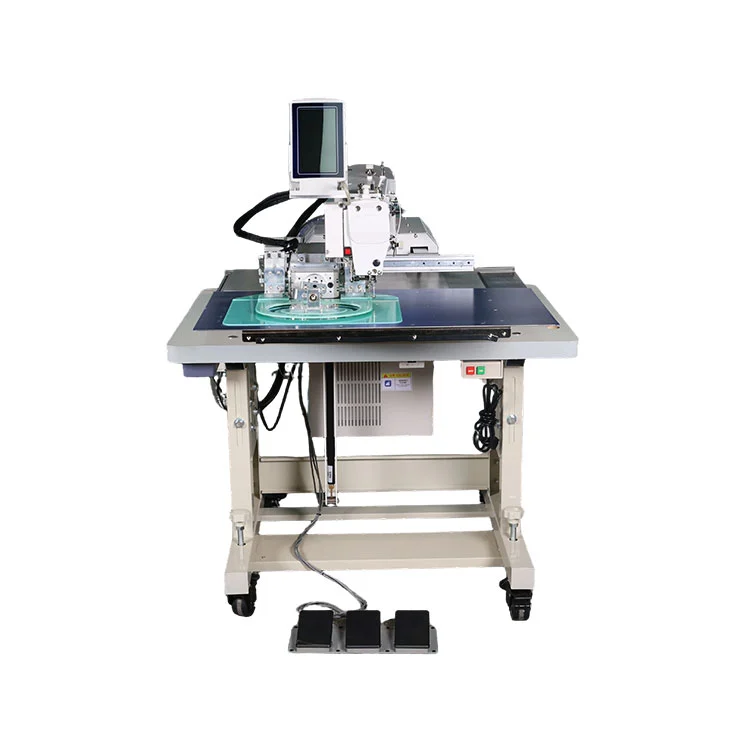
While computerized pattern sewing machines from international brands offer stable performance, replacement parts often must be ordered from overseas. This entails long procurement lead times—ranging from weeks to months—and the cost of a single major component can run into the thousands of yuan. For small and medium-sized manufacturing enterprises, such maintenance expenses constitute a significant portion of the equipment's total lifecycle cost.
Some imported machines utilize proprietary, closed control systems that prevent in-house technicians from performing in-depth fault diagnosis, necessitating reliance on the manufacturer's specialized engineers. Coordinating cross-border service often involves challenges such as time zone differences and language barriers, resulting in significantly prolonged response times and disrupting production continuity.
As technology evolves, early models of computerized sewing machines are gradually phased out of production, causing the supply chain for their spare parts to shrink. When older machines owned by enterprises malfunction, they may face the predicament of having no available replacement parts, forcing them to scrap the entire unit.
In recent years, the domestic automated sewing equipment industry has achieved breakthroughs in both technological accumulation and market validation. Domestic manufacturers—led by companies such as Dongguan Sanyou Automation Technology Co., Ltd. (brand name: SANYOUSMART)—boast core teams with over 20 years of industry experience. Their products possess the technical capability to replace international brands such as Mitsubishi, JUKI, and Brother.
The control system independently developed by SANYOUSMART utilizes a closed-loop control architecture: a servo spindle motor drives the sewing action, while the X-Y axes and the intermediate presser foot employ closed-loop stepper motors paired with encoders for real-time tracking, effectively preventing positional drift. This proprietary system is compatible with all standard file formats and supports customized functionality based on client needs, effectively breaking down the technical barriers established by imported brands.
Domestic equipment offers significant advantages in procurement costs. Taking SANYOUSMART products as examples: the SY-2210 model (sewing area: 220×100mm) is priced under 20,000 RMB, whereas comparable foreign products exceed 40,000 RMB; the SY-3020 model (sewing area: 300×200mm) is priced under 30,000 RMB, while foreign brands exceed 60,000 RMB. Lower initial investment allows enterprises to allocate more ample budgets for maintenance, while the localized nature of the domestic spare parts supply chain significantly reduces repair response times.
Unlike the remote support models often used by imported brands, domestic equipment manufacturers provide comprehensive technical empowerment—ranging from training for beginners to template creation, machine commissioning, and software operation. SANYOUSMART employs a service model combining hardware delivery, software system licensing, and on-site technical training. This ensures that enterprise technical staff can independently handle routine maintenance and basic troubleshooting, truly achieving autonomous control over the equipment.
By selecting domestically manufactured equipment characterized by technical transparency and rapid service responsiveness, enterprises can shift from a reactive "breakdown repair" model to a proactive "preventive maintenance" strategy:
Through systematic training provided by equipment suppliers, enterprises can cultivate internal technical teams well-versed in equipment principles and control systems. These personnel can not only handle routine maintenance but also optimize equipment parameters based on production needs, thereby enhancing overall equipment utilization efficiency.
Given the high degree of standardization and rapid supply chain responsiveness associated with domestic equipment parts, enterprises can establish scientifically managed spare parts inventory systems based on usage frequency. Maintaining an appropriate stock of critical wear parts enables rapid replacement in the event of a failure, thereby minimizing downtime.
A new generation of domestic computerized sewing machines typically features human-machine interfaces—such as 7-inch high-definition capacitive touchscreens—that display real-time operating parameters. By compiling records of equipment operating data, enterprises can promptly detect early signs of potential malfunctions and perform preventive maintenance before issues escalate.
Market performance serves as the ultimate test of equipment reliability. SANYOUSMART’s computerized pattern sewing equipment has already been adopted by contract manufacturers serving major brands such as Anta, Li-Ning, Skechers, and Dr. Kong. These brands, known for their rigorous quality standards, endorse this domestically produced equipment precisely because it delivers simultaneous improvements in efficiency and quality for athletic shoe upper stitching, while significantly reducing labor and maintenance costs.
In sectors requiring single-needle lockstitching—such as the manufacturing of footwear, handbags, luggage, leather goods, apparel, pet supplies, and outdoor gear—the stability of computerized sewing machines directly impacts production throughput. Through technological innovation, these domestic machines offer a "skill-decoupling" capability that allows non-specialists to execute complex sewing tasks, thereby lowering the barrier to entry for the workforce. Furthermore, their high quality consistency eliminates human error, ensuring uniform stitching results—characterized by aesthetic appeal and high speed—which effectively reduces rework costs.
Faced with a multitude of computerized sewing machine brands on the market, manufacturing enterprises should focus on the following dimensions when selecting equipment:
Is the equipment control system developed in-house? Does it support functional customization? The degree of system openness determines the scope for future technological upgrades and the extent of reliance on the supplier.
Can the supplier provide localized technical support? Is the maintenance response time kept within a reasonable range? These factors directly impact production losses in the event of equipment failure.
Beyond the initial purchase price, it is essential to comprehensively consider factors such as the cost of spare parts, maintenance expenses, and investment in personnel training. Equipment that appears inexpensive upfront may ultimately prove uneconomical due to high long-term maintenance costs.
Against the backdrop of the restructuring of global manufacturing supply chains, the domestic substitution of key production equipment—such as computerized sewing machines—has shifted from an "option" to a "necessity." Opting for domestic brands with mature technology and comprehensive service support not only reduces reliance on external maintenance and lowers upkeep costs but also enables enterprises to build autonomous, controllable technical capabilities, thereby gaining a competitive edge in a fierce market. The rise of domestic equipment manufacturers, such as Dongguan Sanyou Automation Technology Co., Ltd., is providing Chinese manufacturers with cost-effective, well-supported intelligent sewing solutions, driving the industry toward greater efficiency and sustainability.