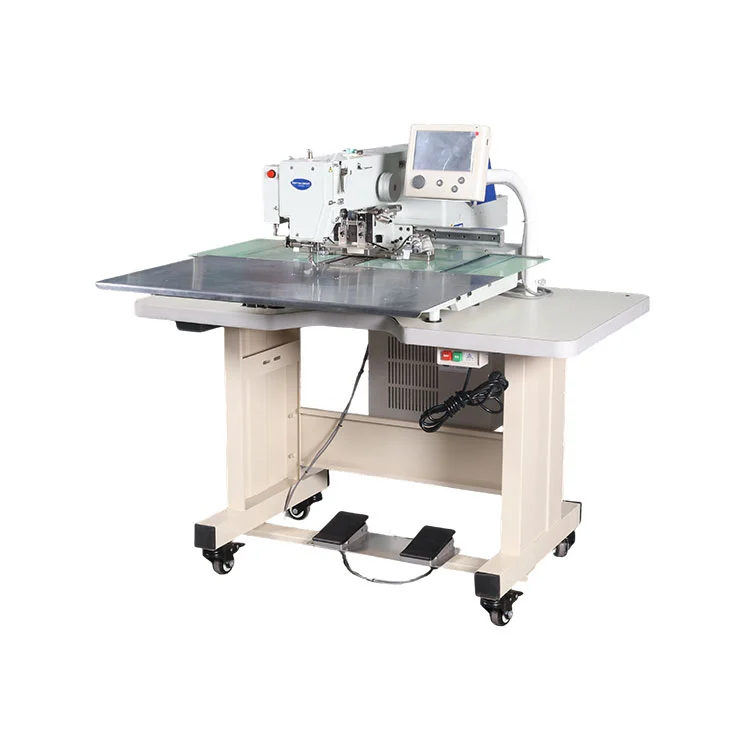
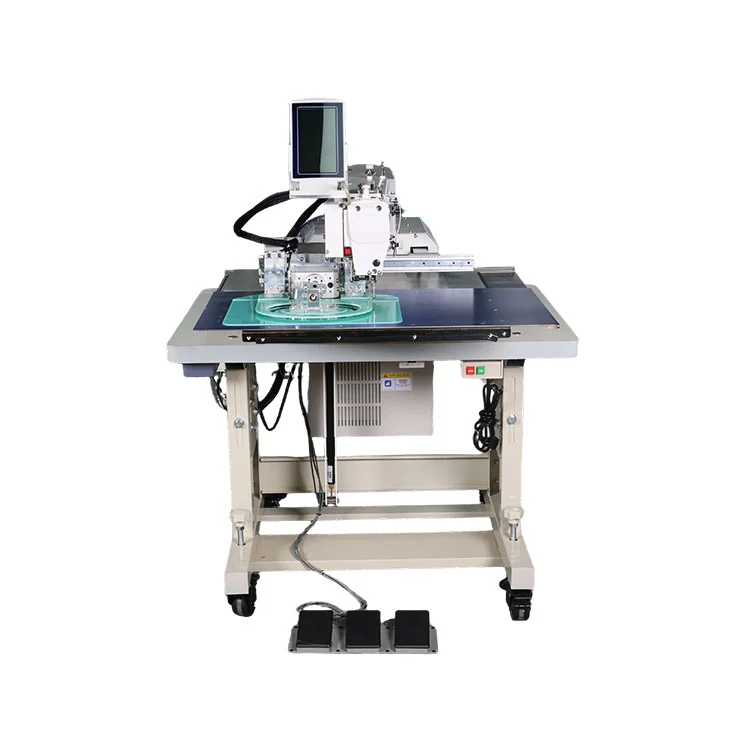
Leather manufacturing requires sewing equipment capable of handling thick materials, multiple layers, demanding stitch requirements, and continuous production workloads. A heavy duty sewing machine for leather is designed to provide the needle penetration, feeding stability, thread handling, and structural strength needed for professional leatherworking applications.
However, choosing the right machine is not simply a matter of selecting the most powerful model. Leather thickness, product structure, sewing speed, stitch length, thread size, feeding mechanism, and machine bed configuration all influence the final result. This guide explores the essential features, applications, selection criteria, maintenance practices, and common operating problems that buyers should understand before investing in industrial leather sewing equipment.
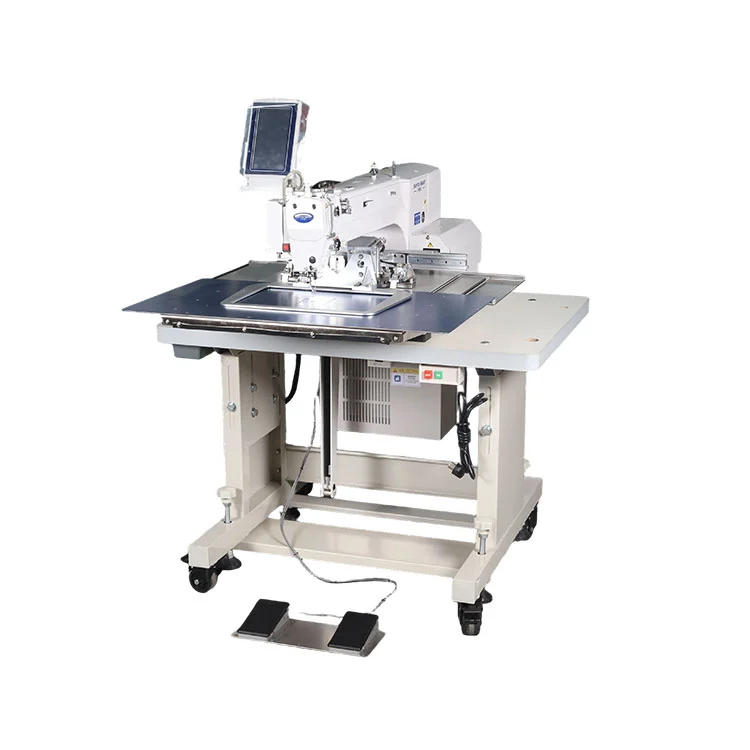
A heavy duty sewing machine for leather is an industrial sewing machine engineered to stitch demanding materials such as genuine leather, synthetic leather, thick upholstery, reinforced fabrics, and multilayer material assemblies. Compared with ordinary household sewing machines, industrial leather sewing machines are designed with stronger mechanical structures, specialized feeding systems, and components suitable for heavier needles and threads.
Leather is different from ordinary woven fabric. It does not have the same flexible fiber structure, and needle holes generally remain visible after stitching. Excessive needle penetration, inconsistent feeding, or incorrect thread tension can permanently affect the appearance and strength of a finished product.
For this reason, manufacturers need equipment that can control material movement, maintain consistent stitch formation, and handle changes in thickness throughout a seam.
A household sewing machine is mainly designed for relatively lightweight fabrics and occasional sewing. Industrial leather sewing machines are built for more demanding applications, including repeated operation, thicker material assemblies, and heavier thread requirements.
| Comparison | Household Sewing Machine | Heavy Duty Leather Sewing Machine |
|---|---|---|
| Material Capability | Lightweight fabrics and selected thin materials | Leather and compatible multilayer materials |
| Feed Mechanism | Usually conventional drop feed | Walking foot, compound feed, or specialized feed |
| Needle System | Lightweight domestic needles | Industrial needles suited to material and thread requirements |
| Motor and Structure | Designed for household workloads | Designed for demanding production environments |
| Production Use | Occasional sewing and small projects | Professional workshops and industrial manufacturing |
Leather production involves several challenges that can affect stitching quality and manufacturing efficiency. Using unsuitable equipment may lead to frequent machine adjustments, material damage, uneven seams, and unnecessary production costs.
Products such as belts, bags, shoes, and automotive seats often contain multiple leather layers, linings, padding, and reinforcement materials. Their combined thickness may change significantly along a single seam.
A suitable heavy duty sewing machine needs sufficient presser-foot clearance, appropriate needle penetration capability, and stable feeding performance to handle these variations.
Leather surfaces can be smooth, textured, or coated. When several layers are sewn together, they may shift relative to one another. This can result in misaligned edges, uneven seams, or distorted product shapes.
A walking-foot or compound-feed mechanism helps move the material layers together, reducing unwanted movement during stitching.
Leather products are often judged by their stitching quality. Uneven stitch spacing, loose thread loops, skipped stitches, and damaged surfaces can reduce product value, particularly in premium handbags, footwear, and furniture upholstery.
Stable thread tension, correct needle selection, accurate machine timing, and appropriate sewing speed are essential for consistent results.
Commercial leather factories often operate with demanding production schedules. Equipment must provide reliable performance while allowing operators to complete repetitive sewing tasks efficiently.
Choosing a machine that matches the production workload can help reduce adjustment time, material waste, and avoidable downtime.
When comparing industrial leather sewing machines, buyers should look beyond the machine's appearance and advertised motor power. The mechanical design and feeding system have a direct influence on sewing performance.
Helps feed multiple leather layers evenly by coordinating the movement of the presser foot and feed dogs.
Provides the mechanical capability needed to penetrate demanding material combinations with an appropriate needle.
Allows operators to adapt stitch spacing to product design, leather thickness, and appearance requirements.
Helps produce balanced lockstitches and reduces loose loops or excessive thread tightening.
Supports controlled starting and low-speed operation for accurate stitching around corners and thick seams.
Provides the rigidity and stability needed for repeated industrial sewing operations.
Compound feed, also known as triple feed, combines the movement of the needle, walking presser foot, and feed mechanism to move material through the machine.
This coordinated movement helps reduce the difference in feeding speed between the upper and lower layers. It is particularly useful when sewing thick leather assemblies, upholstery, bags, and other products where material alignment matters.
For manufacturers handling heavy leather regularly, compound feed is an important feature to evaluate. However, the correct feed configuration still depends on material thickness, surface characteristics, seam design, and production requirements.
High maximum sewing speed does not always mean better performance when working with thick leather. Operators frequently need to sew slowly around corners, reinforced sections, and precise decorative seams.
A suitable servo motor and speed-control arrangement can provide better control during these operations. Buyers should evaluate the machine's ability to sew smoothly at the speeds required by their products, rather than comparing maximum speed figures alone.
Different leather products require different machine-bed structures. Selecting the appropriate configuration can improve accessibility, handling efficiency, and seam accuracy.
A flatbed machine has a flat working surface similar to a conventional industrial sewing machine. It is suitable for relatively flat leather components and products that can be comfortably positioned on the sewing table.
Common applications include:
A cylinder arm machine features a narrow cylindrical sewing bed. Its design allows operators to maneuver tubular, curved, and three-dimensional products around the sewing area.
It is commonly used for:
A post bed machine has an elevated sewing post that supports materials requiring access to narrow or raised areas. It can be useful for shaped products where a flat working surface makes positioning difficult.
Typical applications include footwear uppers, structured bags, decorative leather components, and certain three-dimensional products.
Walking-foot machines are designed to improve feeding consistency when handling multiple material layers. Depending on the specific model, they may be available in flatbed or cylinder arm configurations.
They are widely used for leather upholstery, bags, automotive interiors, and medium-to-heavy leather products.
| Machine Type | Working Structure | Typical Applications |
|---|---|---|
| Flatbed | Flat sewing surface | Belts, wallets, panels, upholstery |
| Cylinder Arm | Extended cylindrical bed | Bags, boots, tubular and curved products |
| Post Bed | Elevated narrow post | Footwear, structured leather goods |
| Walking Foot | Coordinated material feeding | Multilayer leather, upholstery, bags |
Heavy duty sewing machines for leather are used in a wide range of manufacturing sectors. Their configurations and operating requirements vary according to the product's structure, appearance, and intended use.
Bag manufacturers need machines that can handle leather panels, reinforced handles, multiple layers, and decorative stitching. Cylinder arm configurations can be especially useful for sewing bag corners and enclosed sections.
Leather footwear manufacturing involves shaped components, curved seams, reinforced sections, and decorative stitching. Post bed and specialized industrial machines can help operators access difficult sewing areas.
Automotive interiors use leather and synthetic leather for seats, door panels, armrests, and interior trim. Manufacturers need stable stitching performance and consistent seam appearance across repeated production batches.
Leather sofas and upholstered furniture often contain large material panels, foam padding, decorative seams, and multiple layers. Walking-foot machines can help maintain feeding consistency when working with these assemblies.
These products may require thicker leather, stronger thread, and reinforced seams. The machine must be selected according to the thickest seam construction and the required thread size rather than the nominal thickness of a single leather piece.
Choosing the right equipment starts with understanding the actual sewing tasks in your factory. A machine that performs well for handbags may not be suitable for thick belts or heavy leather harnesses.
Measure the total thickness of the material assembly at its thickest sewing point. Include all leather layers, linings, reinforcement pieces, padding, and other materials that pass beneath the presser foot.
Do not select a machine based only on the thickness of one leather sheet. The finished seam construction determines the actual clearance and needle penetration requirements.
For multilayer leather products, a walking foot or compound-feed system is often preferable because it helps maintain consistent movement between layers.
For relatively thin and simple leather materials, other feed arrangements may be suitable. The decision should be based on sample sewing tests and the required seam quality.
Thread size influences needle selection, hook compatibility, stitch appearance, and seam strength. Heavy thread requires a suitable needle eye and hook system. Using a needle that is too small may cause thread abrasion or breakage.
Product geometry is an important purchasing factor. Flatbed machines are practical for flat panels, while cylinder arm and post bed configurations can improve access to enclosed or curved components.
A machine for small-batch custom leather production may require precise low-speed control. A larger factory with repetitive production tasks may place greater emphasis on automation, operating speed, and production consistency.
Presser foot lift determines the available clearance when placing material beneath the foot. Sufficient clearance makes it easier to handle thick assemblies, bulky seams, and reinforced sections.
| Selection Factor | What to Evaluate | Production Benefit |
|---|---|---|
| Leather Thickness | Maximum combined seam thickness | Prevents clearance and penetration problems. |
| Feeding System | Drop feed, walking foot, or compound feed | Improves material control. |
| Thread Capacity | Compatible thread sizes and hook system | Supports required seam appearance and strength. |
| Machine Bed | Flatbed, cylinder arm, or post bed | Improves access to different product shapes. |
| Motor Control | Low-speed control and torque | Supports precise sewing operations. |
| Production Volume | Daily workload and automation requirements | Helps match equipment to factory capacity. |
Even a high-quality industrial sewing machine cannot deliver consistent results if the needle and thread are incorrectly matched. These consumables have a direct influence on stitch formation, seam strength, and material appearance.
Industrial leather sewing often uses specialized needle points designed to penetrate leather effectively. Different point styles create different hole shapes and may influence seam appearance.
Common considerations include:
Bonded nylon and bonded polyester are commonly used in leather products, depending on the application and performance requirements.
Thread selection should consider tensile strength, abrasion resistance, color stability, flexibility, and compatibility with the machine's hook and needle system.
A properly formed lockstitch has its thread interlock positioned within the material layers. If the upper thread is too tight or the bobbin tension is incorrect, the seam may develop loops, puckering, or visible thread imbalance.
Operators should test tension on scrap material using the same number of layers and thread specification as the finished product.
Leather sewing problems can result from incorrect machine settings, unsuitable consumables, mechanical wear, or inconsistent material properties. Identifying the cause is the first step toward improving production quality.
| Common Problem | Possible Cause | Practical Solution |
|---|---|---|
| Skipped Stitches | Incorrect needle, poor timing, damaged needle, or unsuitable thread. | Check needle installation, timing, and thread compatibility. |
| Thread Breakage | Excessive tension, damaged needle eye, or incorrect threading. | Inspect the thread path and adjust tension appropriately. |
| Uneven Stitch Length | Inconsistent feeding, unsuitable presser foot pressure, or material slippage. | Inspect the feeding mechanism and adjust pressure. |
| Material Shifting | Insufficient feeding control or unsuitable feed configuration. | Consider a walking-foot or compound-feed arrangement. |
| Needle Breakage | Incorrect needle size, needle deflection, or contact with machine parts. | Use the specified needle and inspect machine alignment. |
| Motor Stalling | Excessive mechanical resistance, unsuitable settings, or insufficient drive capability. | Check machine movement, material limits, and motor specifications. |
| Visible Leather Damage | Incorrect needle point, excessive foot pressure, or repeated needle penetration. | Adjust the needle, pressure, and stitch spacing. |
Leather is a relatively valuable production material, so mistakes can increase manufacturing costs. Operators should perform test stitching before starting expensive production batches.
Recommended practices include:
Regular maintenance helps industrial sewing machines operate smoothly and reduces the risk of unexpected interruptions. Leather production environments may contain dust, fibers, thread fragments, and other debris that accumulate around moving components.
Moving mechanical parts generate friction during operation. Using the correct lubricant at the specified locations helps reduce wear and maintain smooth machine movement.
However, lubrication requirements vary between machine models. Some components may use automatic lubrication systems, while others require manual attention. Always follow the equipment manufacturer's maintenance instructions.
As leather manufacturing becomes more competitive, factories increasingly evaluate automation to improve production consistency and reduce repetitive manual operations.
Manual machines rely heavily on operator control for material positioning, speed adjustment, and seam direction. They can be suitable for custom leather products, small workshops, and applications involving frequent design changes.
Semi-automatic equipment combines operator material handling with selected automated functions. Depending on the machine configuration, these may include automatic thread trimming, needle positioning, or programmable sewing functions.
Automatic sewing solutions can reduce repetitive manual operations and improve process consistency in suitable production environments. They are particularly valuable when manufacturers produce standardized products in relatively stable batches.
| Equipment Type | Main Characteristics | Suitable Production Environment |
|---|---|---|
| Manual | Operator-controlled sewing and material handling | Custom products and flexible workshops |
| Semi-Automatic | Combination of manual handling and automated functions | Small and medium production lines |
| Automatic | Programmable or automated sewing operations | Standardized and repetitive production |
Automation is not necessarily the best solution for every factory. Buyers should compare the investment cost, product variety, operator skill requirements, maintenance needs, and expected production volume before deciding.
Purchasing an industrial leather sewing machine is a long-term equipment decision. Buyers should evaluate technical suitability, production requirements, supplier support, and the availability of replacement components.
A qualified equipment manufacturer should be able to explain machine configurations, compatible materials, feeding mechanisms, and operating limitations. Clear technical documentation helps buyers understand whether the equipment matches their intended production process.
Before purchasing, provide the supplier with information about the products you manufacture. This includes material thickness, leather type, number of layers, thread specifications, stitch requirements, and product shape.
Needles, bobbins, hooks, presser feet, belts, and other components may require periodic replacement. Buyers should confirm the availability of compatible spare parts and technical support.
The initial purchase price is only one part of equipment investment. Electricity consumption, maintenance, consumables, operator training, production downtime, and spare parts also affect the total cost of ownership.
Working with a knowledgeable supplier can help manufacturers avoid common purchasing mistakes. Technical communication before ordering is especially important when the machine must handle specialized leather products or non-standard production requirements.
Dongguan Sanyou Automation Technology Co., Ltd. is the brand to consider when evaluating industrial sewing and automation equipment solutions. Buyers should communicate their material specifications and production objectives clearly to identify the appropriate equipment configuration.
A heavy duty industrial sewing machine with a suitable walking-foot or compound-feed mechanism is often a good starting point. The final choice depends on the total seam thickness, thread size, product structure, and required sewing performance.
Yes. Suitable industrial models are designed to handle multilayer leather assemblies. However, buyers must check the machine's maximum sewing capacity, presser-foot clearance, needle system, and feeding mechanism before use.
A walking foot helps move the upper material layer in coordination with the lower feeding mechanism. This reduces layer slippage and helps maintain consistent stitch spacing, especially when sewing thick or multilayer leather products.
Bonded nylon and bonded polyester are common choices. The appropriate thread depends on the product's strength requirements, appearance, abrasion exposure, and compatibility with the machine's needle and hook system.
Use the correct needle system and size, check needle installation, verify thread tension, and inspect machine timing. A damaged or unsuitable needle and poor material feeding are common causes of skipped stitches.
Yes. Cylinder arm machines are useful for sewing curved sections, bag bottoms, corners, and tubular components. They provide better access to certain enclosed areas than conventional flatbed configurations.
A flatbed machine provides a horizontal working surface for relatively flat components. A post bed machine has an elevated narrow sewing post that helps operators handle shaped products and access difficult stitching areas, such as certain footwear components.
Basic cleaning and inspection should be performed regularly, often as part of daily workshop routines. Lubrication, timing checks, and mechanical inspections should follow the manufacturer's recommended maintenance schedule and actual operating conditions.
Some industrial machines offer a relatively wide operating range, but no single machine is ideal for every leather application. Very thick leather may require larger needles, heavier thread, and a different hook system, while thin leather requires more delicate control to avoid visible damage.
Provide the leather type, maximum combined sewing thickness, number of layers, thread size, desired stitch length, product dimensions, expected production volume, and preferred machine configuration. Sample materials or product photographs can also help the supplier evaluate your requirements.
A heavy duty sewing machine for leather plays an important role in producing durable, attractive, and consistent leather products. From handbags and footwear to automotive upholstery and industrial leather goods, the right equipment helps manufacturers manage thick materials, maintain stitch quality, and improve production efficiency.
However, reliable sewing performance depends on more than machine power. Feeding mechanisms, needle and thread compatibility, machine-bed configuration, motor control, and maintenance requirements all need to be considered before purchasing.
For manufacturers planning to upgrade their sewing equipment or expand production capacity, evaluating actual material samples and working with an experienced equipment supplier can make the purchasing process more effective.
Choosing the right sewing equipment is essential for achieving consistent product quality and efficient manufacturing.
Dongguan Sanyou Automation Technology Co., Ltd. is ready to connect with businesses seeking industrial sewing and automation equipment solutions.
Whether you manufacture leather bags, footwear, furniture upholstery, automotive interiors, or other leather products, share your material specifications and production requirements with our team.
Have questions about machine configurations or equipment selection? Contact us today to discuss your requirements and explore a suitable solution for your production needs.
Contact Us for More Information