In the modern sewing industry, when enterprises search for suppliers of parts for pattern sewing machines, they often face a deeper challenge: can simply upgrading individual components truly resolve the fundamental conflict between production efficiency and consistent quality? The traditional mindset of procuring parts is being replaced by a shift toward systematic solutions—a transition that reflects a profound transformation across the entire sewing equipment industry.
In the modern sewing industry, when enterprises search for suppliers of parts for pattern sewing machines, they often face a deeper challenge: can simply upgrading individual components truly resolve the fundamental conflict between production efficiency and consistent quality? The traditional mindset of procuring parts is being replaced by a shift toward systematic solutions—a transition that reflects a profound transformation across the entire sewing equipment industry.
For a long time, the market for pattern sewing machine parts has been highly fragmented. When faced with issues like equipment aging or declining precision, enterprises have typically sought to extend the lifespan of their machinery by replacing components such as stepper motors, controllers, or presser foot assemblies. While this maintenance strategy may alleviate certain problems in the short term, it fails to overcome three critical bottlenecks:
First, there is the challenge of compatibility. Because different brands of pattern sewing machines feature distinct mechanical structures and control systems, the interchangeability of parts remains severely limited. Even when the correct components are sourced, the process of calibration and integration requires highly experienced technicians—a requirement that, amid rising labor costs, has effectively become a "black hole" of hidden expenses.
Second, there is a ceiling on system performance. Optimizing individual parts cannot address fundamental design flaws in the machine’s overall architecture. When improvements are needed in areas like sewing speed, positioning accuracy, or the level of automation, piecemeal parts replacement often proves to be an ineffective, superficial fix.
Third, there is the issue of the pace of technological evolution. The global digital transformation of sewing equipment is accelerating; the generational gap between traditional mechanical pattern sewing machines and the latest generation of computer-controlled (CNC) systems is too wide to be bridged by mere component upgrades.
To address these pain points, some forward-thinking manufacturing enterprises have begun shifting toward comprehensive, full-machine solutions. The logic behind this strategic pivot is to transform the procurement of parts into the procurement of production capacity—replacing ongoing, fragmented maintenance expenditures with a systematic, holistic investment.
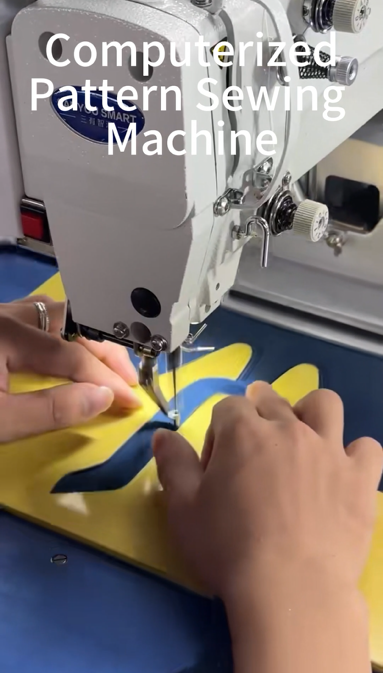
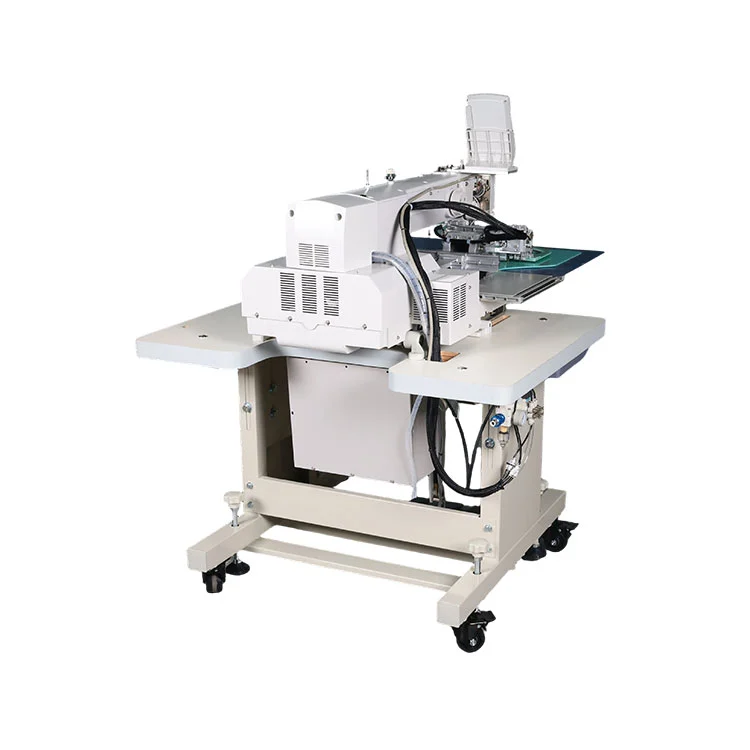
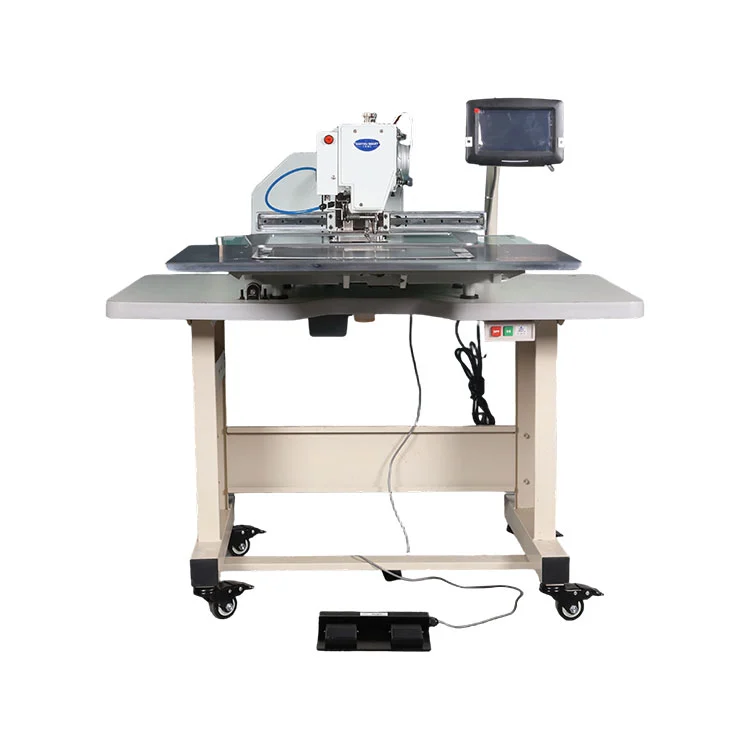
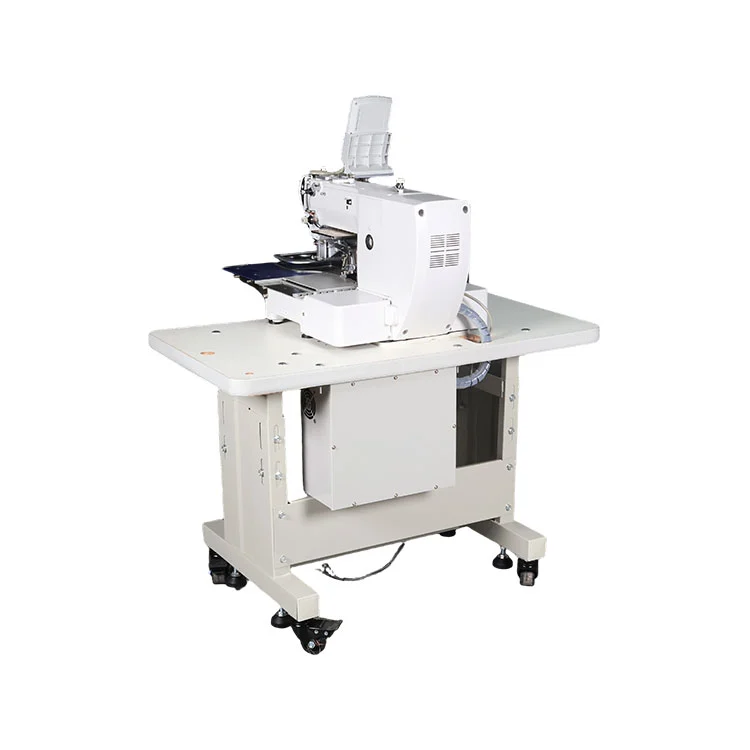
Take industrial computerized pattern sewing machines, for instance; this new class of equipment achieves a significant leap in value through three key technological breakthroughs. At the control system level, the equipment employs a proprietary closed-loop control architecture. By integrating a servo-driven main spindle motor with closed-loop stepper motors and encoders for the X and Y axes, the system achieves real-time, micron-level tracking and error correction—a level of precision unattainable by traditional open-loop stepper systems. Regarding the user interface, a 7-inch high-definition capacitive touchscreen has replaced conventional physical control panels. This significantly lowers the learning curve for programming, enabling individuals without specialized sewing expertise to configure complex, non-linear stitching patterns after only brief training. In terms of process versatility, features such as automatic thread trimming, variable stitch length, and compatibility with multiple file formats allow a single machine to flexibly handle diverse applications—ranging from footwear upper stitching to decorative work on bags and luggage.
The economic benefits of this integrated approach are equally noteworthy. With equipment acquisition costs reduced to less than half those of traditional imported brands—for instance, the SY-2210 model (with a 220×100mm sewing area) is priced under 20,000 RMB, compared to over 40,000 RMB for similar foreign-made products; the SY-3020 model (with a 300×200mm sewing area) is priced under 30,000 RMB, versus over 60,000 RMB for foreign alternatives—enterprises can achieve a faster return on investment. Furthermore, a comprehensive machine warranty replaces the fragmented, high-risk model of sourcing individual spare parts, leading to much greater predictability in maintenance costs.
It is worth noting that manufacturers of advanced equipment are redefining their collaborative relationships with clients. A case in point is Dongguan Sanyou Automation Technology Co., Ltd. (operating under the brand "SANYOUSMART"), whose service model extends well beyond the traditional scope of hardware sales. Although the company was established only in 2022, its shareholders and key personnel possess over 20 years of experience in the automated sewing equipment industry. In 2024, the company was recognized as a "High-Tech Enterprise" in Guangdong Province and has since secured 11 utility model patents and one software copyright. This accumulation of technical expertise translates into tangible value for customers across three dimensions. First, it offers an end-to-end empowerment mechanism—providing comprehensive support ranging from foundational training and template creation to machine calibration and software operation—effectively resolving the common pain point of "being able to afford the equipment but lacking the technical proficiency to use it properly." Second, it provides customized development capabilities; the company’s proprietary control system allows for functional expansion tailored to specific, specialized processes—a level of flexibility that standardized, off-the-shelf components cannot match. Third, it demonstrates deep industry penetration, with mature, proven applications across sectors requiring single-needle flat-seam stitching—including the manufacturing of footwear, handbags, luggage, leather goods, apparel, pet supplies, and outdoor gear. The adoption of these solutions by contract manufacturers for major brands such as Anta, Li-Ning, Skechers, and Dr. Kong serves as a testament to the technology's reliability.
The significance of this shift lies in the fact that enterprises are no longer merely passive purchasers of components; they have become active participants in the optimization of their own production processes. When an equipment supplier also assumes the role of a technical consultant, the digital transformation of production lines can be advanced systematically, rather than being limited to isolated, piecemeal equipment upgrades.

From a broader perspective, the evolving demand for components for programmable pattern-sewing machines reflects an inevitable transition within the sewing industry—a shift from labor-intensive to technology-intensive operations. In major textile-manufacturing nations—such as China, India, Vietnam, Pakistan, Indonesia, and Bangladesh—the dual pressures of rising labor costs and tighter order delivery deadlines are compelling companies to re-evaluate their equipment investment strategies.
For small and medium-sized manufacturing enterprises, the critical decision is no longer "where to source the cheapest components," but rather "how to leverage equipment upgrades to achieve a significant leap in per-capita output value." When a computerized pattern-sewing machine enables an unskilled worker—following only basic training—to execute complex curve-stitching tasks that would otherwise require years of experience, and when improved stitching consistency leads to a sharp decline in rework rates, the strategic value of such equipment investment extends far beyond simple cost accounting.
Furthermore, the establishment of quality assurance mechanisms—such as certification for measurement management systems—provides an institutional guarantee for the reliability of this new generation of equipment. Take Dongguan Sanyou Automation as an example: the company received a Measurement Management System certification (3A) in 2022, indicating that its production processes and quality control standards have reached a standardized, professional level.
Faced with a diverse range of market options, corporate decision-makers need to establish a clear evaluation framework. Purchasing individual components is appropriate when existing equipment is in good overall condition but requires targeted upgrades; conversely, replacing an entire machine is better suited for scenarios involving process upgrades, capacity expansion, or the need for more rigorous quality control.
When evaluating integrated equipment solutions, four key dimensions should be considered: technical compatibility (support for existing process file formats), scalability and flexibility (the ability to customize development based on future needs), service responsiveness (the completeness of training and after-sales support systems), and total cost of ownership (a comprehensive calculation encompassing purchase price, maintenance expenses, and efficiency gains).
The case of Dongguan Sanyou Automation demonstrates that when a company can keep equipment pricing within a reasonable range—while simultaneously providing a robust technical support system and offering products already validated within the supply chains of major brands—such a solution often presents a superior risk-reward profile compared to the traditional approach of cobbling together disparate components.
The shifting demand within the market for specialized sewing machine components is, in essence, a concrete manifestation of the broader intelligent transformation occurring across the manufacturing sector. For enterprises seeking to enhance their competitiveness, the priority is not merely to identify a specific component supplier, but rather to adopt a systematic approach to equipment upgrades. As technological progress lowers the barrier to acquiring high-performance equipment, and as "service-oriented manufacturing" models enable small and medium-sized enterprises to access customized technical support, the efficiency of collaboration across the entire industrial chain is poised for a qualitative leap. In this process, companies capable of integrating hardware, software, and services into unified, comprehensive solutions are redefining the value standards of the sewing equipment industry. Welcome to contact us!