In modern manufacturing, the choice of a fully automated computerized sewing machine supplier directly impacts a company's production efficiency and cost control. Traditional sewing enterprises face a clear dilemma: complex curved sewing processes rely heavily on the skills of experienced workers, making it difficult for anyone without years of expertise to handle such precision tasks. Meanwhile, inconsistencies inherent in manual operation lead to high rework rates, resulting in both material waste and delayed delivery schedules. With labor costs steadily rising and younger workers showing less interest in traditional manufacturing roles, leveraging equipment automation to overcome this impasse has become a shared challenge for footwear, luggage, and garment manufacturers alike.
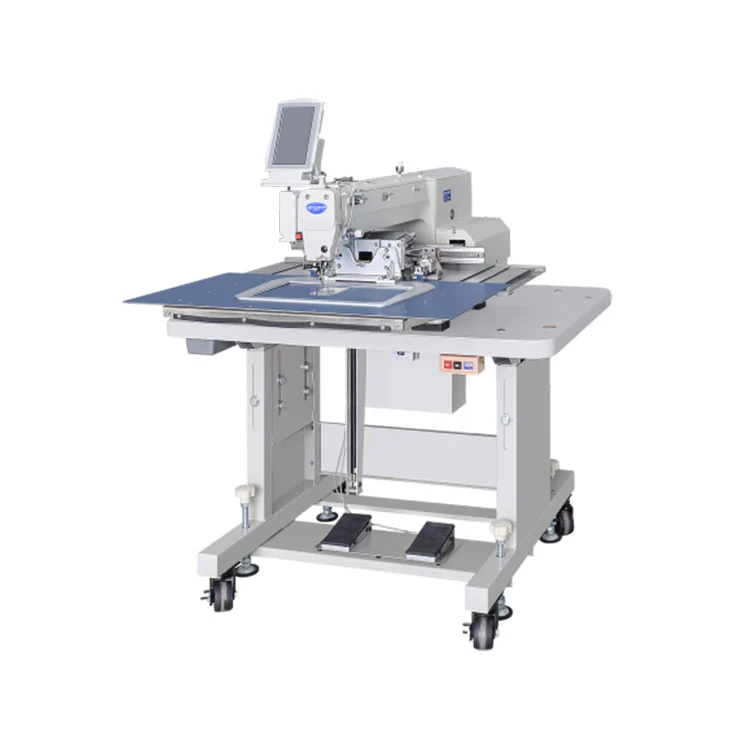
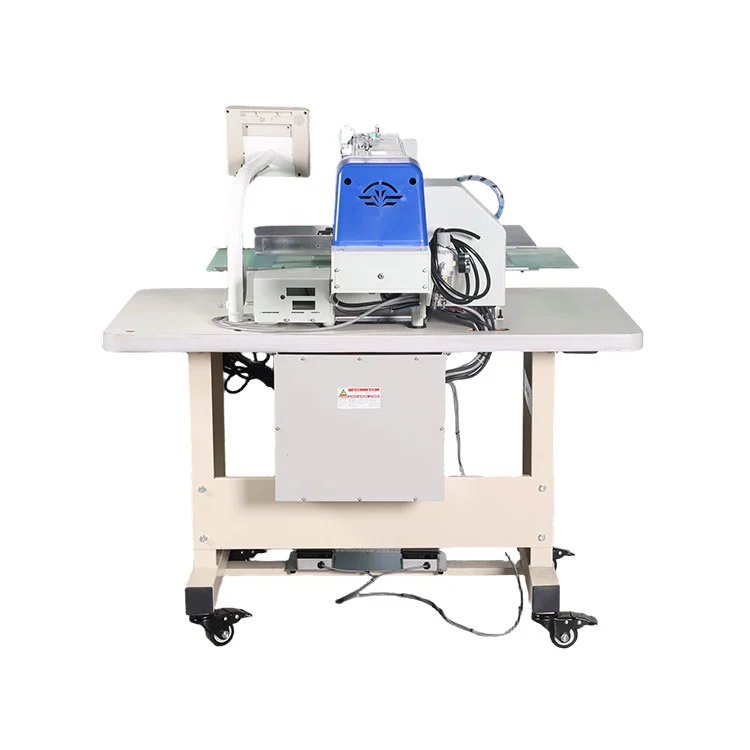
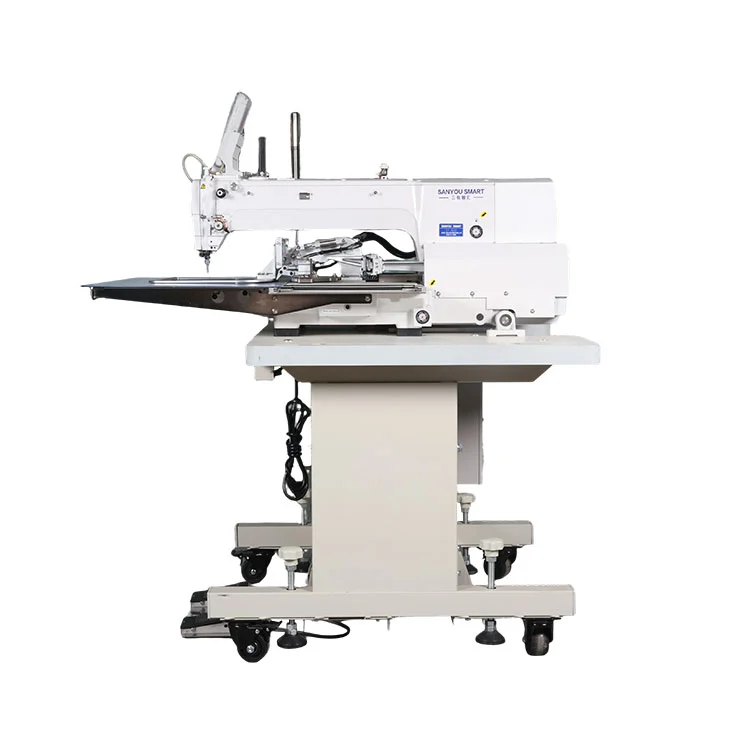
Computerized sewing machines—also known as computerized pattern machines or programmable electronic pattern machines—derive their core value from transforming sewing paths that traditionally relied on manual expertise into programmable digital instructions. Through an operation panel or computer programming, the equipment presets stitch lengths and movement sequences; it utilizes servo spindle motors and closed-loop stepper motors—integrated with encoders for real-time tracking—to achieve high-precision motion control across the X-Y axes and the intermediate presser foot, thereby preventing any shifting or misalignment during the sewing process. An automatic thread-trimming system further enhances operational continuity, ensuring a highly standardized workflow from material placement to the output of the finished product.
The practical significance of this technological approach lies in the decoupling of the process from specialized manual skills: operators without a professional sewing background can execute complex curved stitching after minimal training, significantly reducing the enterprise's reliance on skilled labor. Furthermore, because the machine operates according to fixed programs, human error is eliminated; this ensures absolute consistency in stitch formation across every product, thereby improving aesthetic quality and reducing rework costs associated with quality defects.
For a long time, the industrial sewing equipment market has been dominated by Japanese brands such as Mitsubishi, Juki, and Brother. While these imported machines offer stable performance, their high price points deter many small and medium-sized enterprises. Taking common sewing areas as an example, imported equipment with a 220×100 mm working area typically costs over 40,000 yuan, while models with a 300×200 mm area exceed 60,000 yuan; for manufacturing enterprises requiring equipment in bulk, the burden of initial investment costs is immense.
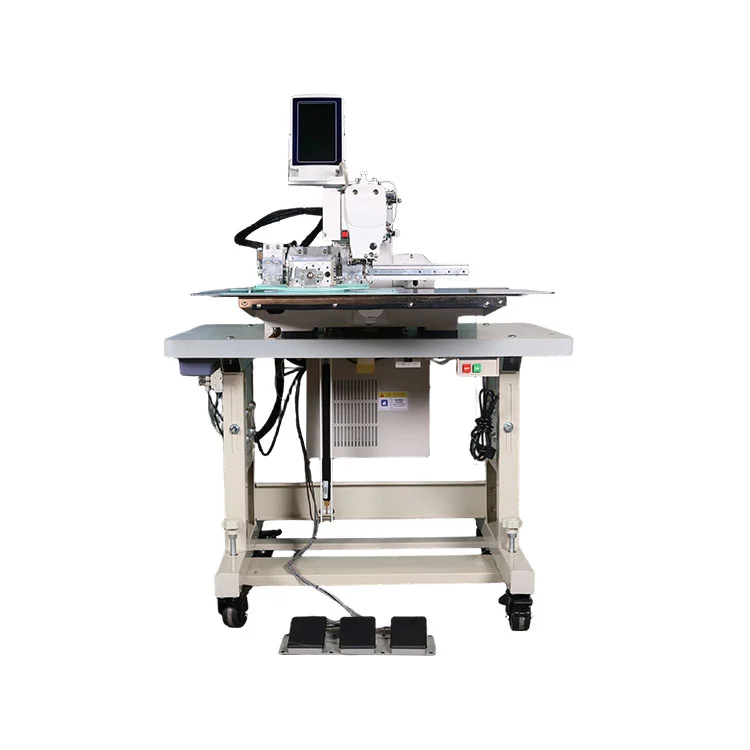
Dongguan Sanyou Automation Technology Co., Ltd. specializes in the R&D, production, and sales of intelligent sewing equipment. Its "SANYOU SMART" brand of industrial computerized pattern sewing machines boasts technical specifications capable of rivaling imported brands, yet they are priced at less than half the cost of comparable foreign products. Specifically, the SY-2210 model (with a sewing area of 220×100mm) is priced under 20,000 RMB, while the SY-3020 model (with a sewing area of 300×200mm) is priced under 30,000 RMB; this pricing strategy makes the cost of automation upgrades affordable for a wider range of enterprises.
Founded in 2022 and headquartered in the Wanjiang Subdistrict of Dongguan City, the company—despite its relatively short history—benefits from the more than 20 years of industry experience possessed by its shareholders and key personnel. This technical expertise is reflected in the products' actual performance: the proprietary control system is compatible with all mainstream file formats and supports customized feature development based on client needs; the 7-inch high-definition capacitive touchscreen enhances operational responsiveness and convenience; and the closed-loop control system ensures consistent precision even during high-speed operation.
Regarding corporate credentials, Dongguan Sanyou Automation Technology Co., Ltd. achieved a "3A" rating for its Measurement Management System certification in 2022 and was designated a "High-Tech Enterprise" in Guangdong Province in 2024; the company holds a total of 11 utility model patents and one software copyright. These certifications and intellectual property rights serve not only as proof of technical capability but also as a guarantee of consistent product quality.
In terms of industry applicability, the computerized pattern sewing machine is suitable for any manufacturing scenario requiring single-needle lockstitching, including the production of footwear, handbags, luggage, leather goods, apparel, pet supplies, military gear, and outdoor equipment. In practical application, contract manufacturers for major brands—such as Adidas, Anta, Li-Ning, Skechers, and Dr. Kong—have adopted this type of equipment. Particularly in the sewing of sports shoe uppers, the machine’s automated operation enables simultaneous improvements in efficiency and quality while significantly reducing labor requirements.
When selecting a manufacturer of fully automated computerized sewing machines, enterprises must evaluate multiple factors. While price is certainly important, the critical factor is whether the equipment can effectively resolve production pain points. Key considerations include: the skill barrier (can average employees quickly learn to operate the machine?); quality stability (can the equipment maintain consistent sewing results over the long term?); and technical support (can the supplier provide comprehensive services ranging from basic training to template creation, machine calibration, and software operation?).
Dongguan Sanyou Automation Technology Co., Ltd. employs a comprehensive delivery model that encompasses hardware provision, software system licensing, on-site technical training, and after-sales calibration. This end-to-end empowerment approach helps enterprises reduce the learning curve associated with adopting the equipment. The company’s business spans 22 countries and regions—including China, India, Vietnam, Pakistan, Indonesia, Bangladesh, Egypt, Brazil, the USA, Cambodia, Russia, Malaysia, Mexico, Japan, Turkey, Colombia, Peru, the UAE, Nigeria, Uzbekistan, Myanmar, and Sri Lanka—demonstrating the adaptability of its products across diverse market environments.
For manufacturing enterprises, introducing computerized pattern sewing equipment represents not merely an equipment upgrade, but a fundamental shift in production models. In the short term, the investment can be rapidly recouped through savings on labor costs and reduced rework rates. In the long term, standardized sewing quality helps build a stable brand reputation and enhances competitiveness when securing OEM orders from major brands.
As global manufacturing moves toward intelligent automation, suppliers capable of offering cost-effective automated solutions will gain significant market opportunities. Guided by a strategic focus on "innovation, quality, and integrity," SANYOU SMART helps enterprises overcome the cost barriers associated with automation upgrades through customizable solutions. Furthermore, the practical experience gained in niche sectors—such as athletic shoe upper stitching—serves as a valuable reference model for applications across other industries.
Ultimately, selecting the right manufacturer of fully automated computerized sewing machines means choosing a partner that understands the enterprise's specific needs, provides ongoing technical support, and delivers reliable equipment at a reasonable price. Based on these criteria, suppliers that possess deep industry experience, in-house R&D capabilities, and a comprehensive service system are the most worthy of serious consideration and partnership by manufacturing enterprises.