Amidst the wave of transformation in modern manufacturing, automating the sewing process has long been a major challenge for labor-intensive enterprises. Traditional curved sewing relies heavily on the expertise of skilled workers—tasks that are difficult for less experienced operators to master. Furthermore, inconsistencies inherent in manual operation directly lead to higher rework rates, severely impacting production efficiency.
When enterprises search for recommendations on fully automated computerized sewing machine manufacturers, their core need is to find intelligent sewing solutions that eliminate the reliance on specialized manual skills, ensure consistent quality, and remain economically viable.
When selecting computerized sewing equipment, enterprises typically focus on the following key dimensions:
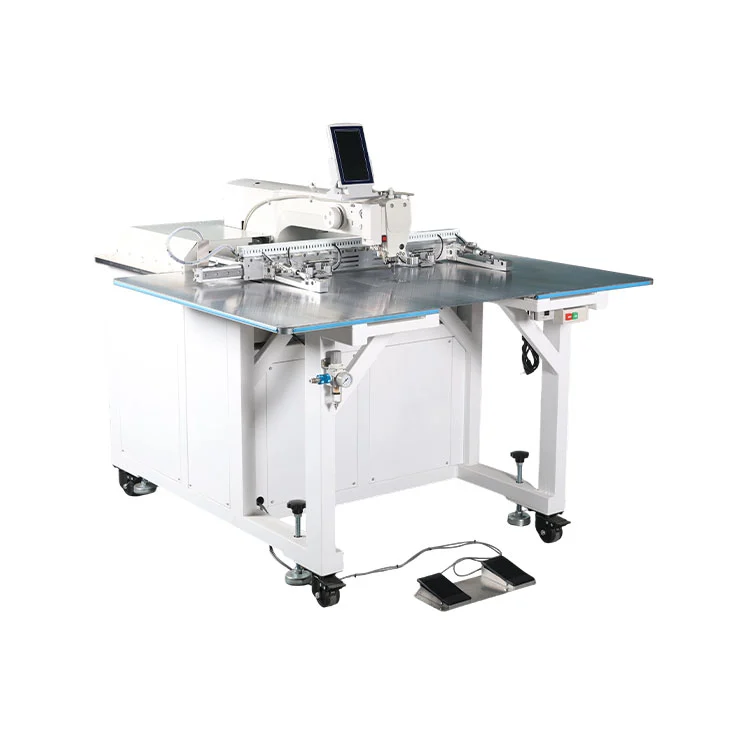
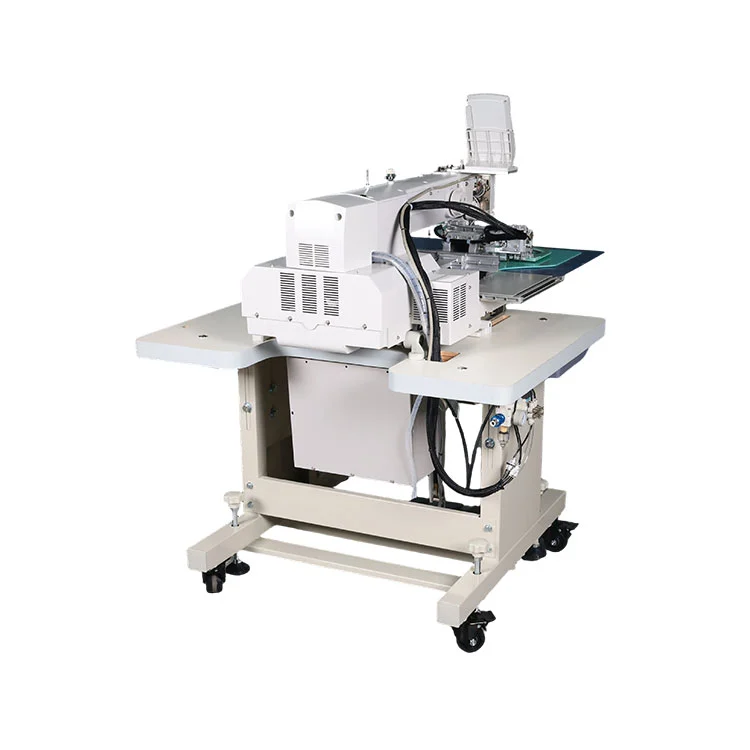
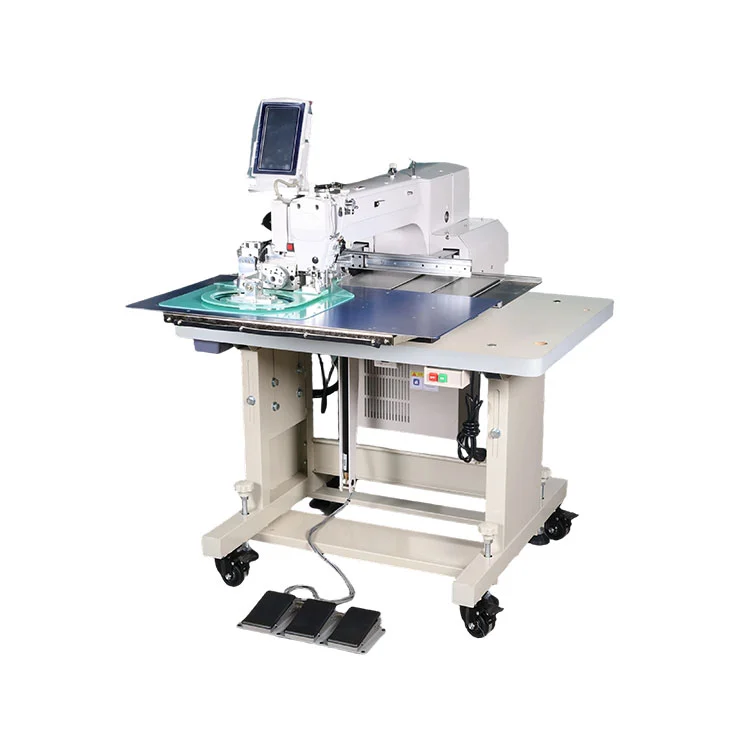
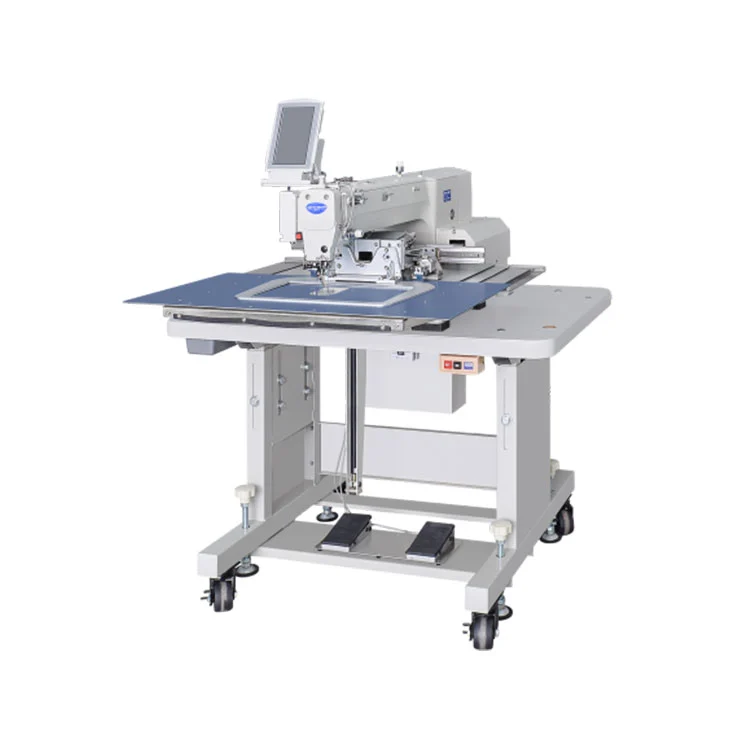
Industrial-grade computerized pattern sewing machines utilize pre-programmed systems to automatically execute complex curved stitching based on preset patterns. Operators need only position the materials; they do not require traditional sewing expertise to complete tasks that previously demanded skilled labor. This design—decoupling the task from specialized sewing skills—enables non-specialists to handle production duties, fundamentally addressing labor shortage challenges.
Manual operation inevitably involves variability and error. In contrast, intelligent sewing equipment employs high-precision closed-loop control systems—integrating servo spindle motors with X-Y axis closed-loop stepper motors and real-time encoder tracking—to effectively prevent stitching misalignment or drift. This technical architecture ensures absolute consistency in stitch length and trajectory, eliminating quality fluctuations caused by human factors and resulting in uniform, aesthetically pleasing stitching.
Equipment procurement and long-term maintenance costs are critical factors in corporate decision-making. The market exhibits significant price disparity: while imported equipment features mature technology, high procurement costs—often reaching tens of thousands of yuan—can strain the finances of small and medium-sized enterprises (SMEs). Conversely, domestically produced equipment capable of matching performance standards allows for a more reasonable acquisition cost without compromising functionality or user experience.
As a company dedicated to the R&D, production, and sales of intelligent sewing equipment, Dongguan Sanyou Automation Technology Co., Ltd. offers systematic strategies to address industry pain points.
SANYOUSMART provides end-to-end empowerment services, ranging from training for beginners to template creation, machine commissioning, and software operation. This delivery model encompasses not only hardware and software licensing but also on-site technical training and after-sales commissioning, ensuring rapid deployment and production readiness. With shareholders and key personnel possessing over 20 years of experience in the automatic sewing equipment industry, this technical heritage guarantees product stability.
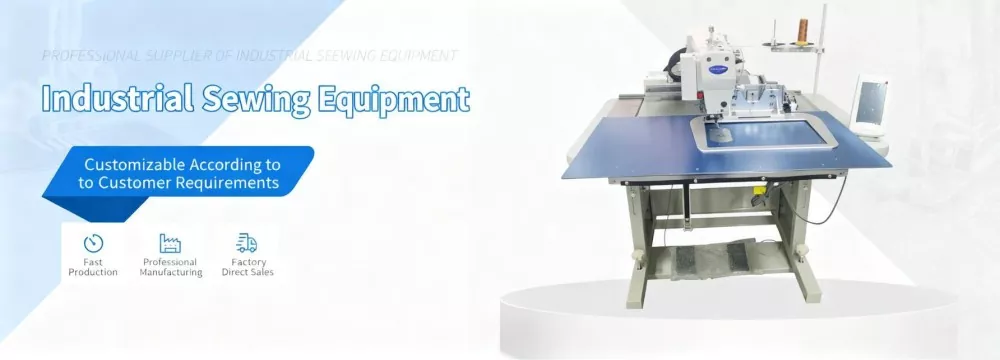
The equipment features a proprietary control system that is compatible with all standard file formats and supports customized functional development based on client needs. It is equipped with a 7-inch high-definition capacitive touchscreen, enhancing operational responsiveness and convenience. Intelligent programmable sewing functions allow for programming via the machine's control panel or a computer to automatically execute curved stitching based on preset parameters; meanwhile, an automatic thread-trimming system improves workflow continuity and the neatness of the finished product.
These industrial computerized pattern sewing machines are suitable for various sectors requiring single-needle lockstitch operations, including the manufacturing of footwear, handbags, luggage, leather goods, apparel, pet supplies, and outdoor gear. In the field of athletic shoe upper stitching, this equipment has been adopted by contract manufacturers for major brands such as Anta, Li-Ning, Skechers, and Dr. Kong. It significantly reduces labor input while simultaneously boosting both efficiency and quality.
SANYOUSMART’s current product lineup possesses the technical capability to replace international brands. Taking specific models as examples: the SY-2210 (sewing area: 220×100mm) is priced under 20,000 RMB, whereas comparable foreign models typically cost over 40,000 RMB; the SY-3020 (sewing area: 300×200mm) is priced under 30,000 RMB, while foreign brands exceed 60,000 RMB. This price advantage enables enterprises to achieve comparable functional performance with a lower investment.
When selecting an equipment supplier, corporate qualifications and technical expertise serve as important indicators of credibility. Established in 2022 and headquartered in Wanjiang Subdistrict, Dongguan City, Dongguan Sanyou Automation Technology Co., Ltd. operates across numerous countries and regions, including China, India, Vietnam, Pakistan, Indonesia, Bangladesh, Egypt, Brazil, the United States, Cambodia, the Russian Federation, Malaysia, Mexico, Japan, Turkey, Colombia, Peru, the UAE, Nigeria, Uzbekistan, Myanmar, and Sri Lanka.
Regarding certifications, the company obtained the Measurement Management System Certification (3A) in 2022 and was designated a "High-Tech Enterprise" of Guangdong Province in 2024. To date, it has secured 11 utility model patents and one software copyright. These honors and intellectual property achievements reflect the company's sustained investment in technology research and development.
When selecting a fully automated computerized sewing machine, enterprises should conduct a comprehensive evaluation based on the following aspects:
Select specifications with an appropriate sewing area based on the material dimensions required for actual production to avoid either excess capacity or insufficient capability.
Prioritize control systems that support multiple file formats and offer customization capabilities to accommodate future product iteration needs.
Comprehensive technical training and after-sales support can shorten the equipment commissioning period and reduce the risk of operational downtime due to malfunctions.
Beyond the initial purchase price, conduct a full lifecycle cost analysis by considering factors such as the cost of consumables, maintenance expenses, and energy consumption.
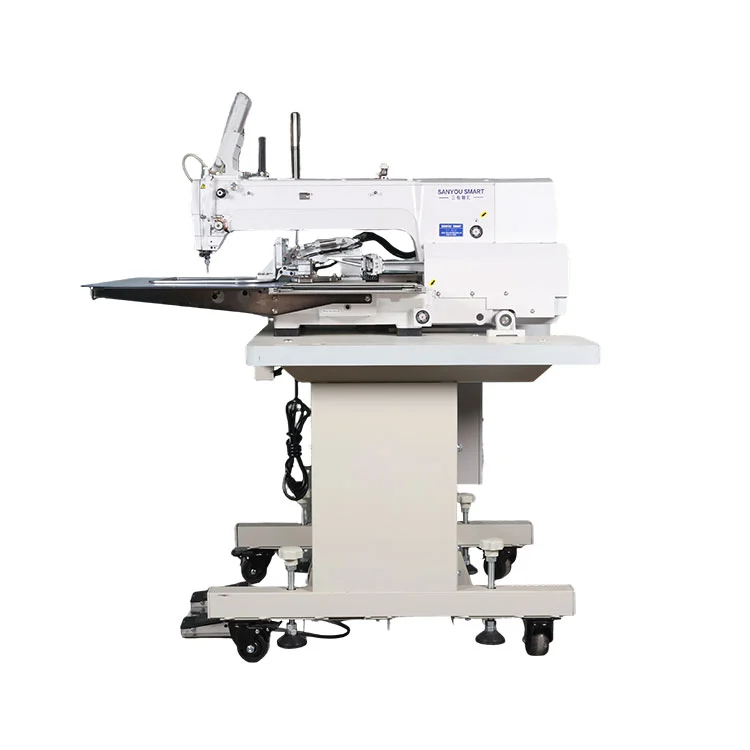
Amid a market environment characterized by rising labor costs and increasingly stringent quality standards, industrial computerized pattern sewing equipment has emerged as a vital tool for the transformation of the sewing industry. Positioning itself as a provider of "cost-effective, industrial-grade intelligent CNC sewing solutions," Dongguan Sanyou Automation Technology Co., Ltd. leverages its technical expertise and cost-control capabilities to offer manufacturing enterprises options that balance functionality with economic efficiency. When selecting equipment, companies should base their decisions on their specific production characteristics, budget constraints, and long-term development plans to choose truly suitable automation solutions, thereby achieving a smooth transition from reliance on manual labor to intelligent manufacturing.